
Categories
- Agriculture / Farm
- Animals
- Arts / Crafts
- Beauty / Fashion
- Books / Literature
- Business / Finance
- Cities / Places
- Computers / IT
- Construction
- Materials & Supplies
- Ecology / Climate
- Educational
- Electronics
- Energy / Utilities
- Food / Drinks
- Games
- General
- Geography
- Geology
- Health / Fitness
- History
- Home / Garden
- Jobs / Careers
- Kids / School
- Law / Government
- Music / Movies / TV
- News / Media
- Occasions
- Christmas
- Easter
- Halloween
- New Year
- Saint Patrick's Day
- Thanksgiving
- Valentine's Day
- Outdoors
- Religion / Belief
- Safety / Prevention
- Science
- Astronomy
- Biology
- Chemistry
- Physics
- Seasonal
- Shopping
- Society / Culture
- Sports
- Tools / Equipment
- Travel / Tourism
- Vehicles
Ecology & Environment Crossword Puzzles
Explore the wonders of nature with our free printable Ecology & Environment Crossword Puzzles collection. These are good to test your knowledge about your surrounding, like biomes, ecology, environment, and climate change. Help your kids understand the importance of ecology and climate with our free Ecology and Climate crossword puzzles to help them better understand these topics.
These puzzles provide an excellent way to review vocabulary related to climate and ecology, finding connections between concepts. Download and print to see how many clues you can solve.

the living things and nonliving things in an area, an organism that uses the sun’s energy to make its own food, an animal that eats other organisms …

they provide an important ecosystem for life underwater, the world largest known predator fish, they can live up to be 50-100 years old!, this species …

what greenhouse gas makes up 0.04% of our atmosphere, is our atmosphere a pure substance or a mixture?, the atmosphere helps maintain a stable …
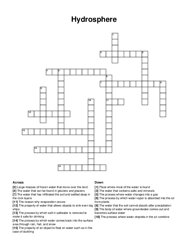
the property of water that allows objects to sink even big ships, the water that contains salts and minerals, the water that can be found in glaciers …

the island paradise drowning in plastic, what we want you to do when it comes to your plastic habits, 80% of marine litter is made up of this, we are …

to a sea turtle, a plastic bag looks like a _ , to help our environment, you should _ , recycle and reduce, throwing trash or items on the ground is …

water-based, water bodies with less than 1% salt, water bodies with, smaller non-flowing water systems; may be seasonal, larger non-flowing water …

significantly impact water quality by causing excessive growth of algae, increase temperature and reduces oxygen levels and may harm river species, …

the process by which the land becomes desert, a long period in which there is little or no rain, gases and other substances discharged into the air, …

saving and wise use of natural resources, material from earth that people use are _ resources, damage done to the environment by the introduction of …

unsustainable use of natural resources, the natural environment in which a species lives and grows, concerned with beauty or the appreciation of …

_ is not created or destroyed, but is recycled, the _ cycle is _ moving from producers to consumers to decomposers back to producers, these organisms …

broken down by erosion to begin soil production, grown without human interference, the amount of direct sunlight a region receives depends on …
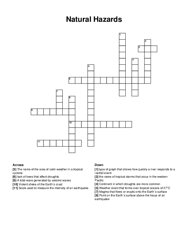
point on the earth´s surface above the focus of an earthquake, type of graph that shows how quickly a river responds to a rainfall event, a tidal …

the variety of plants and animals in the world, the home where animals or plants live, protecting nature for the future, animals or plants at risk of …

an area of ground covered by a single crop, with almost no other species present, the number of different species that live in an area, the complete …

the three "r"s are reduce, reuse and, if we lesson our use of, we are, turn out the lights to save, this is made from trees, carpooling …

a formal set of plans and principles, the surroundings or conditions in which a person, animal, or plant lives, people living together in a more or …

when plants and herbivores cycle in a population, when a limiting factor is affected regardless of population density, when a population decreases in …

the introduction of harmful substances into the environment, land consisting of marshes or swamps, often waterlogged, the light and warmth provided by …

the natural place an animal lives, indigenous to an area, something an animal has or does to aid its survival, absolutely necessary, unique, different …
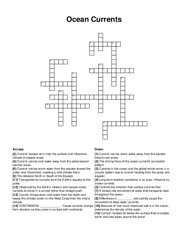
transported by currents from the earth's equator to the poles, current: carries warm water away from the equator toward cool areas, long-term …

there are 3 types of renewable energies, solar, wind and _ ?, china is the leading country at using _ power, what melts due to increase in …

an organism that needs to eat other organisms for food, an animal that eats plants, an animal that hunts or eats other animals, an animal that eats …

a herbivore eats this, organism that has the ability to make their own food, a carnivore eats this, a consumer that eats both plants and animals, a …
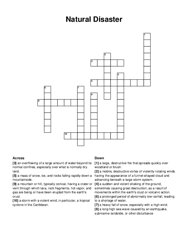
a storm with a violent wind, in particular, a tropical cyclone in the caribbean, a mobile, destructive vortex of violently rotating winds having the …

a large-scale ecosystem, a region in which yearly patterns of temperature, rainfall, and sunlight are similar throughout, found near the equator with …

a colour often linked to sustainability(5), the type of energy provided by the sun?(5), the method used for growing plants in water?(10), the method …

movement of air that redistributes the sun's heat over the earth's surface, when the earth revolves, or moves, around the sun in a nearly …

the average weather conditions in a day, the average yearly temperature and precipitation over 30 years, rain, snow, sleet, or hail that falls to the …
About Ecology & Environment Crossword Puzzles
Ecology & Environment based crossword puzzles feature terms and concepts related to sustainability, ecosystems, biodiversity, and environmental science.
Themes, Categories and Topics
- Biodiversity: Explore terms related to ecosystems, species, and habitats.
- Climate Change: Learn about global warming, greenhouse gases, and renewable energy.
- Sustainability: Highlight practices like recycling, upcycling, and eco-friendly technologies.
- Marine Ecology: Focus on coral reefs, ocean currents, and aquatic life.
- Forestry and Conservation: Cover deforestation, wildlife sanctuaries, and conservation efforts.
Whether you're a teacher, student, or nature lover, it's a fun way to test your brain and enjoy nature.
