
Categories
- Agriculture / Farm
- Animals
- Arts / Crafts
- Beauty / Fashion
- Books / Literature
- Business / Finance
- Cities / Places
- Computers / IT
- Construction
- Materials & Supplies
- Ecology / Climate
- Educational
- Electronics
- Energy / Utilities
- Food / Drinks
- Games
- General
- Geography
- Geology
- Health / Fitness
- History
- Home / Garden
- Jobs / Careers
- Kids / School
- Law / Government
- Music / Movies / TV
- News / Media
- Occasions
- Christmas
- Easter
- Halloween
- New Year
- Saint Patrick's Day
- Thanksgiving
- Valentine's Day
- Outdoors
- Religion / Belief
- Safety / Prevention
- Science
- Astronomy
- Biology
- Chemistry
- Physics
- Seasonal
- Shopping
- Society / Culture
- Sports
- Tools / Equipment
- Travel / Tourism
- Vehicles
Geology & Earth Science Crossword Puzzles
Geology and Earth Science crossword puzzles challenge players to think about natural processes, geological formations, minerals, and the many forces that shape the Earth. From volcanoes and earthquakes to rock types and weather patterns, each puzzle helps deepen our understanding of Earth’s structure and the dynamic processes that happen beneath our feet.
Test your knowledge about the geology, the scientific study of the Earth's structure, composition, processes, and history including rocks, minerals and how earth is formed. So get your thinking caps on and start solving some geology related crossword puzzles today!
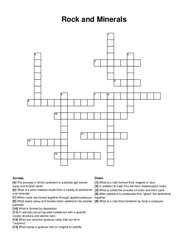
the process in which sediment or particles get moved away and broken down, what is formed by deposition, what is a rock that transform by heat or …
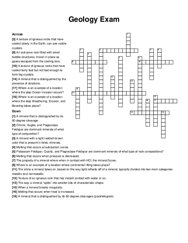
a texture of igneous rocks that have cooled slowly in the earth, can see visible crystals, a texture of igneous rocks that have cooled fairly fast but …
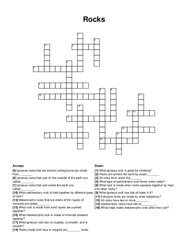
what igneous rock is great for climbing?, what type of sedimentary rock forms under water?, metamorphic rocks that are made of thin layers of minerals …
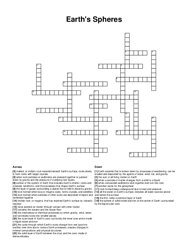
the layer of gases surrounding a planet that is held in place by gravity, the thin, solid, outermost layer of earth, rock formed when particles of …
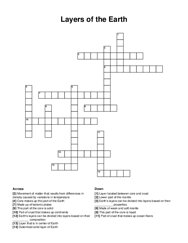
earth's layers can be divided into layers based on their _ composition, this part of the core is solid, part of crust that makes up ocean floors, …
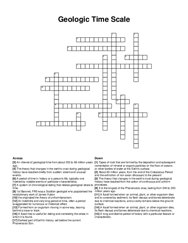
a fossil that is useful for dating and correlating the strata in which it is found, it is the longest of the phanerozoic eras, lasting from 540 to 250 …
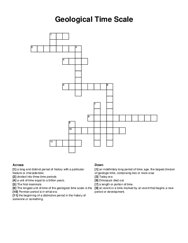
dinosaurs died out, the longest unit of time of the geological time scale is the, an event or a time marked by an event that begins a new period or …
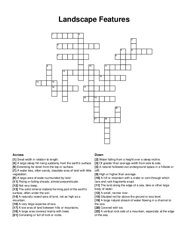
a water less, often sandy, desolate area of land with little vegetation, a large area covered mainly with trees, a natural hollowed-out underground …
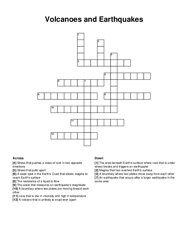
a boundary where two plates move away from each other, a volcano that is unlikely to erupt ever again, lava that is low in viscosity and high in …
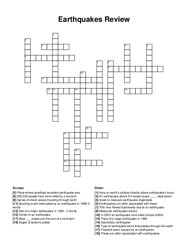
type of earthquake wave that passes through the earth, secondary earthquake, series of shock waves traveling through earth, an earthquake above 9.0 …
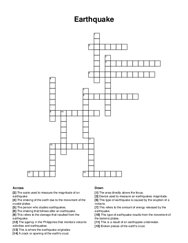
the shaking of the earth due to the movement of the crustal plates, this is where the earthquake originates, the area directly above the focus, this …
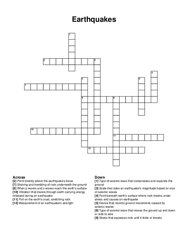
An earthquake is the shaking of the surface of the Earth resulting from a sudden release of energy in the Earth's lithosphere that creates seismic waves.
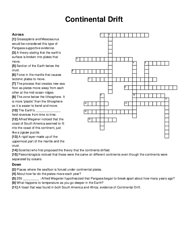
250 _ : alfred wegener hypothesized that pangaea began to break apart about how many years ago?, the process that creates new sea floor as plates move …
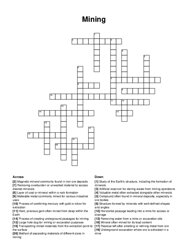
hard, precious gem often mined from deep within the earth, valuable metal often extracted alongside other minerals, large hole dug for mining or …
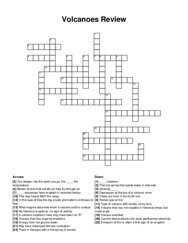
energy from hot ground water, emission of this is often a first sign of an eruption, _ volcanoes have erupted in recorded history, what magma becomes …
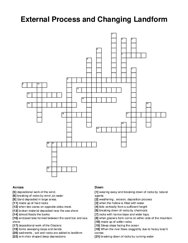
weathering , erosion, deposition process, wearing away and breaking down of rocks by natural agents, breaking of rocks by wind ,air,water, breaking …
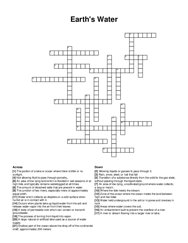
where the tide meets the stream, an area of low-lying land which is flooded in wet seasons or at high tide, and typically remains waterlogged at all …
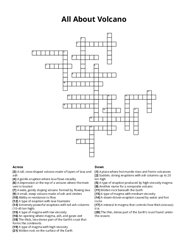
ability or resistance to flow, an opening where magma, ash, and gases exit, a depression at the top of a volcano where the main vent is located, a …
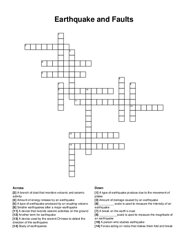
_ scale is used to measure the intensity of an earthquake, a device used by the ancient chinese to detect the direction of the earthquake, a person …
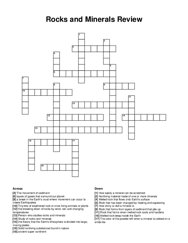
how easily a mineral can be scratched, the color of the powder left when a mineral is rubbed on a white tile, melted rock deep inside the earth, how …
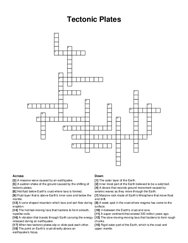
a vibration that travels through earth carrying the energy released during an earthquake, the slow moving-moving lava that hardens to form rough …
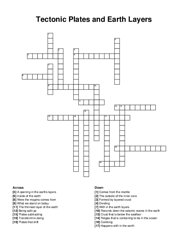
formed by layered crust, happens with in the earth, with in the earth layers, what we stand on today, combing, plates subtracting, records down the …
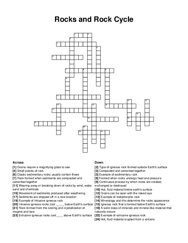
grains require a magnifying glass to see, wearing away or breaking down of rocks by wind, water, sand and chemicals, type of igneous rock formed …
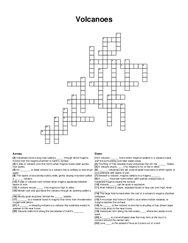
an _ , or dead volcano is a volcano that is unlikely to ever erupt again, volcanic _ can be quiet or explosive, _ is a material found in magma that …
this is a location on the ocean floor where plates are diverging, and is where new lithosphere is being formed, this is another term for mid-ocean …
_ tectonics: a geological model in which the earth's crust and upper mantle (lithosphere) are divided into a number of segments (plates) which …
most abundant element in the universe, high silica lava, where tectonic plates meet, largest layer of the earth, crust and upper mantle, separating …
the process of eroding by wind, what is formed by deposition, what is a rock that transform by heat or pressure, what are the metamorphic process, …
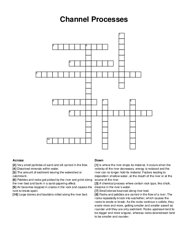
air becomes trapped in cracks in the rock and causes the rock to break apart, pebbles and rocks get picked by the river and grind along the river bed …
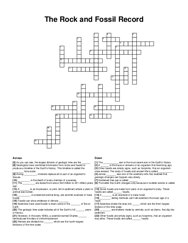
fossils can show evidence of climate _ , hardened tree sap is called _ , the _ eon is the most recent eon in the earth's history, scientists have …
About Geology & Earth Science Crossword Puzzles
This collection of crossword puzzles is all about the fascinating world of geology and earth science. Each puzzle covers different topics like rocks, minerals, volcanoes, fossils, earthquakes, and layers of the Earth. Some puzzles are easy for beginners, while others are a little more challenging for those who already know a lot about earth science.
Each crossword includes clues that are clear and simple, making it easy for learners of all ages. They are great for classroom activities, homework, or just a fun way to spend time while learning.
Whether you’re a young explorer, a science enthusiast, or a teacher looking for a creative way to teach earth science, this collection is a perfect match.
Topics and Categories
Here are some of the topics that you may find in this crossword puzzle collection.
Minerals and Rocks
- Types of Rocks: Clues related to igneous, sedimentary, and metamorphic rocks (e.g., granite, limestone, shale).
- Rock Forming Minerals: Common minerals like quartz, feldspar, mica, calcite.
- Properties of Rocks and Minerals: Hardness, cleavage, luster, streak, and color.
- Mineral Groups: Silicates, carbonates, oxides, sulfides.
Plate Tectonics
- Tectonic Plates: Names of the Earth's major tectonic plates, such as the Pacific Plate, Eurasian Plate, and African Plate.
- Plate Movements: Divergent, convergent, and transform boundaries.
- Geological Features: Mountains, trenches, rift valleys, and volcanoes formed due to tectonic activity.
Volcanology
- Volcanic Terms: Types of volcanoes (shield, composite, and cinder cone), eruption styles, magma vs. lava, pyroclastic flows.
- Volcanic Activity: Terms like “eruption,” “lava flow,” “crater,” and “mantle plume.”
Geological Time Scale
- Eras, Periods, and Epochs: Clues related to geological time, such as Paleozoic, Mesozoic, and Cenozoic eras, and their sub-periods like Jurassic and Cambrian.
- Important Events: Extinction events (e.g., Permian-Triassic Extinction), fossil development, or significant geological events.
Earth’s Internal Structure
- Layers of the Earth: Core (outer and inner), mantle, crust.
- Physical Properties: Terms like lithosphere, asthenosphere, and mesosphere.
- Geothermal Gradient: Heat transfer within the Earth’s interior.
Hydrology and Oceanography
- Water Cycle: Terms related to the movement of water, like evaporation, condensation, precipitation, infiltration, and runoff.
- Ocean Terms: Deep ocean trenches, mid-ocean ridges, and the hydrological properties of oceans (currents, tides).
- Aquifers and Groundwater: Concepts like aquifer, artesian well, and groundwater flow.
Weathering and Erosion
- Physical Weathering: Freeze-thaw, abrasion, and thermal expansion.
- Chemical Weathering: Oxidation, hydrolysis, carbonation.
- Erosion and Sediment Transport: Wind erosion, water erosion, glaciers, and sedimentary deposition.
Fossils and Paleontology
- Fossil Types: Body fossils, trace fossils, and microfossils.
- Fossilization Process: Mineralization, carbonization, amber preservation.
- Important Fossils: Famous fossils like Archaeopteryx, trilobites, and ammonites.
Seismology
- Earthquakes and Waves: Primary (P) waves, secondary (S) waves, surface waves, magnitude, epicenter.
- Seismic Zones: Areas of active seismic activity like the Ring of Fire.
Geohazards
- Natural Disasters: Tsunamis, landslides, earthquakes, and volcanic eruptions.
- Mitigation and Safety: Earthquake-resistant buildings, early warning systems.
Geological Survey and Mapping
- Surveying Tools: Compass, clinometer, GPS.
- Topography and Cartography: Contour lines, relief maps, geologic maps, and how to read them.
Geochemistry
- Chemical Elements: Clues about the chemical elements found in rocks, minerals, and soils (e.g., oxygen, silicon, iron).
- Geochemical Processes: Hydrothermal systems, oxidation/reduction reactions, and geochemical cycles.
These crossword puzzles not only test one’s knowledge of geology and Earth sciences but also provide an enjoyable way to dive deeper into various Earth-related topics, from rock types to volcanic activity.
