
Categories
- Agriculture / Farm
- Animals
- Arts / Crafts
- Beauty / Fashion
- Books / Literature
- Business / Finance
- Cities / Places
- Computers / IT
- Construction
- Materials & Supplies
- Ecology / Climate
- Educational
- Electronics
- Energy / Utilities
- Food / Drinks
- Games
- General
- Geography
- Geology
- Health / Fitness
- History
- Home / Garden
- Jobs / Careers
- Kids / School
- Law / Government
- Music / Movies / TV
- News / Media
- Occasions
- Christmas
- Easter
- Halloween
- New Year
- Saint Patrick's Day
- Thanksgiving
- Valentine's Day
- Outdoors
- Religion / Belief
- Safety / Prevention
- Science
- Astronomy
- Biology
- Chemistry
- Physics
- Seasonal
- Shopping
- Society / Culture
- Sports
- Tools / Equipment
- Travel / Tourism
- Vehicles
Geology & Earth Science Crossword Puzzles
Free printable geology crossword puzzles. Download pre-made or create your own Crossword using our crossword maker. Simply download, print and start playing or play online.
you can find this type of rock in south dakota national park, you can find this rock at the great salt lake in utah, this is not a rock but a fossil, …
slime, is a slippery liquid, a current day shelled mollusk with tentacles, small aquatic snails with a shell that is broadly conical in shape and a …
the process of wearing or the breaking down of rocks into smaller pieces through physical, chemical, or organic means, the process of moving weathered …
rock salt, ductile bond, soft sulphate, ca-plagioclase, pb-sulphide, fluorescent mineral, oldest mineral, softest mineral, strong bond, hard oxide, …
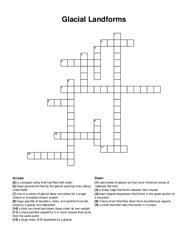
a thick ice sheet that slowly flows under its own weight, vast sheets of glacial ice that cover immense areas of relatively flat land, "rivers of …
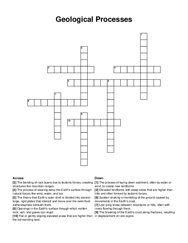
elevated landforms with steep sides that are higher than hills and often formed by tectonic forces, low-lying areas between mountains or hills, often …
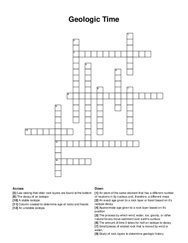
approximate age given to a rock layer based on it's position, the process by which wind, water, ice, gravity, or other natural forces move …
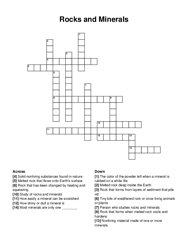
person who studies rocks and minerals, most minerals are only one _ , melted rock that flows onto earth's surface, nonliving material made of one …
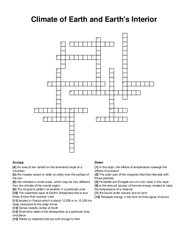
the outer part of the magnetic field that interacts with these particles, in this layer, the effects of temperature outweigh the effects of pressure, …

each step in the transfer of energy and matter within a food web, an organism that cannot make its own food, must always be recycled in the ecosystem, …
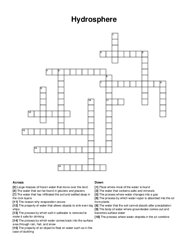
the property of water that allows objects to sink even big ships, the water that contains salts and minerals, the water that can be found in glaciers …

this happens when some minerals melt, and others remain solid, it forms from the partial melting of mantle rocks approximately the same temperature, …
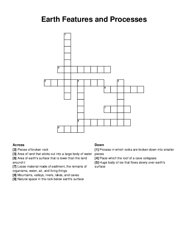
loose material made of sediment, the remains of organisms, water, air, and living things, place which the roof of a cave collapses, process in which …
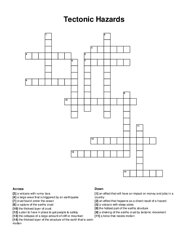
an effect that happens as a direct result of a hazard, a shaking of the earths crust by tectonic movement, a rupture of the earths crust, a force that …
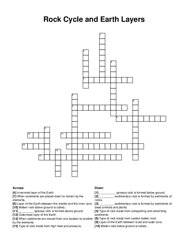
when sediments are placed down to remain by the elements, outermost layer of the earth, _ sedimentary rock is formed by sediments of rocks, _ igneous …
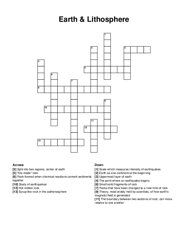
split into two regions; center of earth, theory, most widely held by scientists, of how earth's magnetic field is generated, uppermost layer of …

the attraction of ions from an aqueous solution to a solid surface, a low-permeability layer that limits groundwater flow, saturated rock or sediment …

at what temperature does magma have higher viscosity?, the process that creates magma, a form of energy that is transported through the earth, rock …
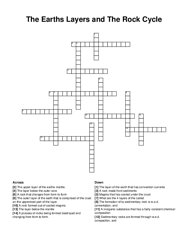
a inorganic substance that has a fairly constant chemical composition, sedimentary rocks are formed through w.e.d. compaction, and, the upper layer of …
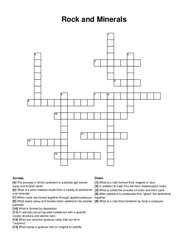
the process in which sediment or particles get moved away and broken down, what is formed by deposition, what is a rock that transform by heat or …
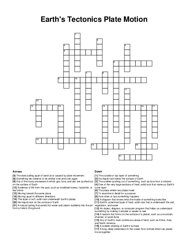
to examine in detail for a purpose, any of earth's main continuous areas of land, such as africa, asia, and north america, moving toward the same …
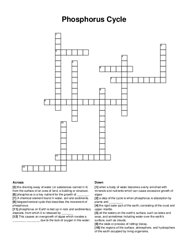
phosphorus on earth is tied up in rock and sedimentary deposits, from which it is released by _ , the rigid outer part of the earth, consisting of the …
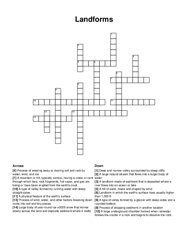
a large underground chamber formed when rainwater follows the cracks in a rock and begins to dissolve the rock, a type of valley formed by a glacier …
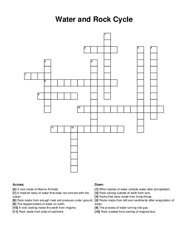
a rock made of marine animals, the process of water turning into gas, rock made from enough heat and pressure under ground, a rock cooling inside the …

seeds the chumash used for food, an ancient hole punch, to dig, scientist who studies people and objects from the past, a rock used for paint, what …
an amorphous hydrated ferric oxide, varying in color from dark brown to yellow, used as an ore of iron, soil formed by rock decay and left as a …
made of hot flowing rock, uppermost mantle and contains the crust, holds the lithosphere and the asthenosphere, the thickest layer, as the layers go …
a deep gorge in the surface of earth formed by the erosion of moving water and sand, the breakdown of rock into smaller particles from the effects of …
a naturally occurring, pure chemical substance, minerals deemed valuable, how light reflects off the surface of a mineral, a type of intrusive igneous …
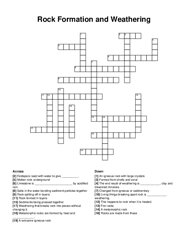
fire rocks, rock formed in layers, changed from igneous or sedimentary, an igneous rock with large crystals, a metamorphic rock, a extrusive igneous …
