
Categories
- Agriculture / Farm
- Animals
- Arts / Crafts
- Beauty / Fashion
- Books / Literature
- Business / Finance
- Cities / Places
- Computers / IT
- Construction
- Materials & Supplies
- Ecology / Climate
- Educational
- Electronics
- Energy / Utilities
- Food / Drinks
- Games
- General
- Geography
- Geology
- Health / Fitness
- History
- Home / Garden
- Jobs / Careers
- Kids / School
- Law / Government
- Music / Movies / TV
- News / Media
- Occasions
- Christmas
- Easter
- Halloween
- New Year
- Saint Patrick's Day
- Thanksgiving
- Valentine's Day
- Outdoors
- Religion / Belief
- Safety / Prevention
- Science
- Astronomy
- Biology
- Chemistry
- Physics
- Seasonal
- Shopping
- Society / Culture
- Sports
- Tools / Equipment
- Travel / Tourism
- Vehicles
Science Crossword Puzzles
Free printable science crossword puzzles. Download pre-made or create your own Crossword using our crossword maker. Simply download, print and start playing or play online.
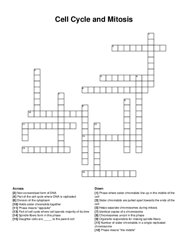
part of cell cycle where cell spends majority of its time, nuclear membrane forms in this phase, part of the cell cycle where dna is replicated, phase …
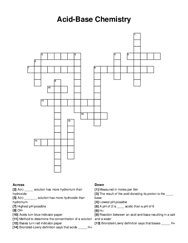
lowest ph possible, a ph of 2 is _ acidic than a ph of 6, a(n) _ solution has more hydronium than hydroxide, reaction between an acid and base …
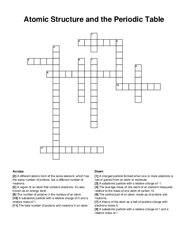
a region of an atom that contains electrons. it's also known as an energy level, the total number of protons and neutrons in an atom, a subatomic …
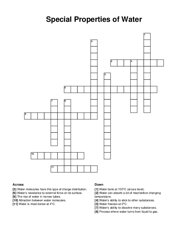
attraction between water molecules, water's ability to stick to other substances, water’s resistance to external force on its surface, water …
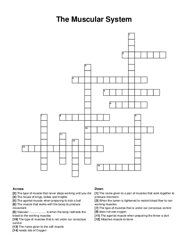
the agonist muscle when preparing the throw a dart, the type of muscle that never stops working until you die, attaches muscle to bone, the type of …
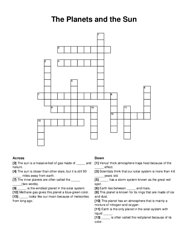
_ has a storm system known as the great red spot, the inner planets are often called the _ _ (two words), the sun is closer than other stars, but it …
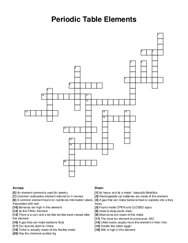
a gas that can make balloons float or explode into a fiery mess, most wires are made of this metal, common radioactive element referred to in movies, …
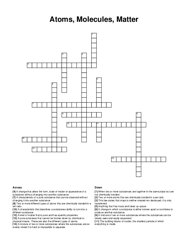
anything that has mass and takes up space, when two or more substances are together in the same place but are not chemically bonded, two or more atoms …
a small packet of light, which is both a wave and a particle, the strange phenomenon where two particles can be connected in such a way that the state …
it rotates to allow you to change the objective lenses, they magnify the specimen with a different power, either electric or a mirror. it passes …
known as the red planet, the inner planets are also known as _ planets, the second largest planet in the solar system, envelope of gases surrounding …
changes solid to a liquid and liquid to a gas, special chemical that absorbs some colors and reflect others, microwave radiation will cook your …
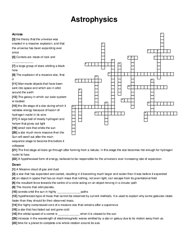
a star that has expanded and cooled, resulting in it becoming much larger and cooler than it was before it expanded, a large ball of mostly hydrogen …
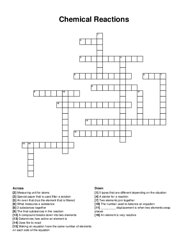
2 substances together, a compound breaks down into two elements, _ displacement is when two elements swap places, 5 types that are different depending …
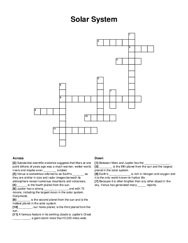
earth's _ is rich in nitrogen and oxygen and it is the only world known to harbor life, _ , our home planet, is the third planet from the sun, _ …
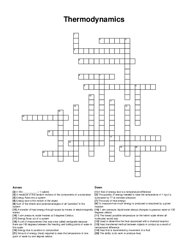
1 atm pressure, liquid water always changes to gaseous water at 100 degrees celsius, a measure of the random motions of the components of a substance, …
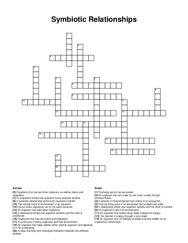
the non-living parts of an ecosystem like sunlight and water, an organism that can make its own food, usually through photosynthesis, the natural home …
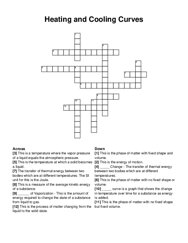
_ change - the transfer of thermal energy between two bodies which are at different temperatures, this is the phase of matter with no fixed shape but …
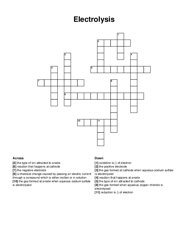
a chemical change caused by passing an electric current through a compound which is either molten or in solution, the positive electrode, the negative …
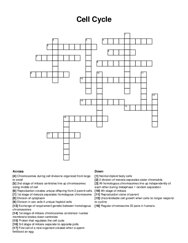
protein that regulates the cell cycle, division in sex cells 4 unique haploid cells, reproduction clone of parent, 3rd stage of mitosis separate to …
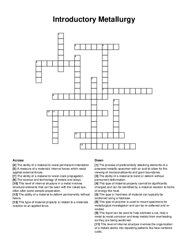
the science and technology of metals and alloys, this liquid can be used to help lubricate a cut, help a metal to resist corrosion and keep metals …
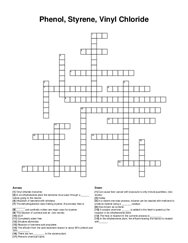
phenol's chemical name, ech, the heat of reaction in the cumene process is _ , ethylene dichloride, in a recent one-step process, toluene can be …
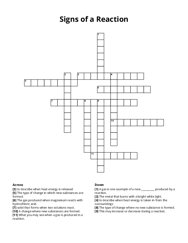
a change where new substances are formed, solid that forms when two solutions react, the gas produced when magnesium reacts with hydrochloric acid, …
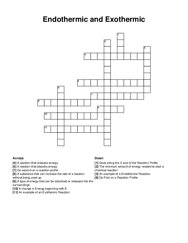
a reaction that absorbs energy, a reaction that releases energy, a substance that can increase the rate of a reaction without being used up, the …
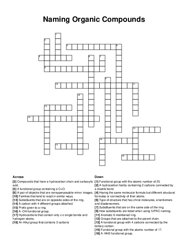
having the same molecular formula but different structural formulas or connectivity of their atoms, substituents that are on opposite sides of the …
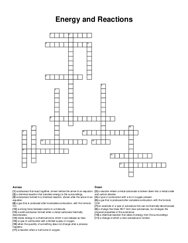
stores energy in a chemical store, which it can release as heat, a change that does not form new substances, but changes the physical properties of …
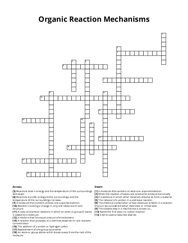
a substance in which other materials dissolve to form a material, a term used to describe alkenes, name the first step in a radical reaction, when the …
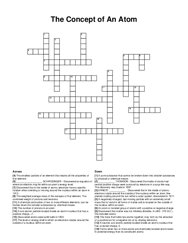
the smallest particle of an element that retains all the properties of that element, a chemical combustion of two or more different elements, can be …
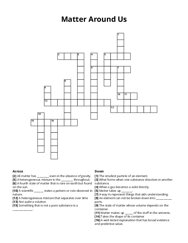
what forms when one substance dissolves in another substance, a well-tested explanation that has broad evidence and predictive value, the smallest …
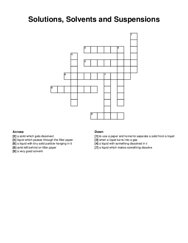
to use a paper and funnel to separate a solid from a liquid, when a liquid turns into a gas, a liquid with tiny solid particle hanging in it, a very …
