
Drugs and the Brain Crossword Puzzle
Download and print this "Drugs and the Brain" crossword puzzle, or solve it online directly in your browser. For the printable version, use a pencil or pen to fill in the answers. The completed answers are included, so you can easily check your work when you're finished.
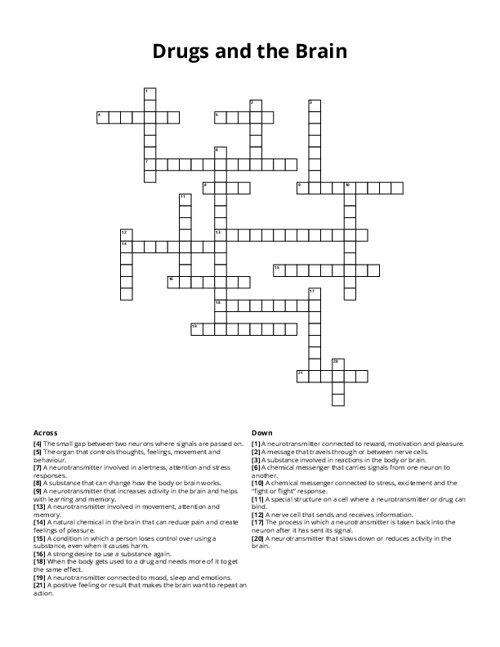
PDF will include puzzle sheet and the answer key.
Related puzzles:
More Health / Fitness Crossword Puzzles
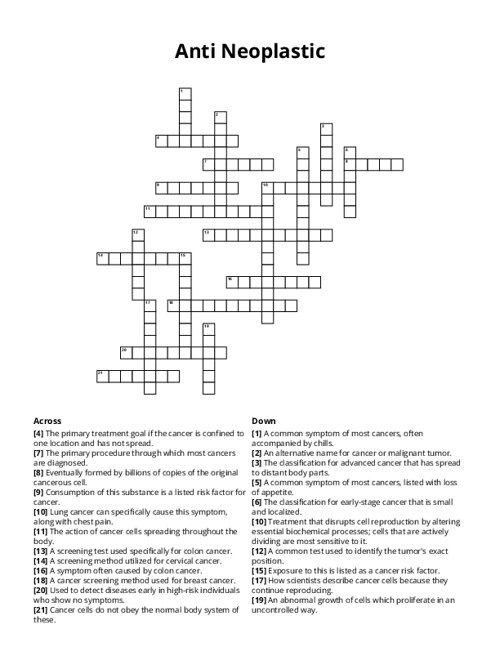
Anti Neoplastic
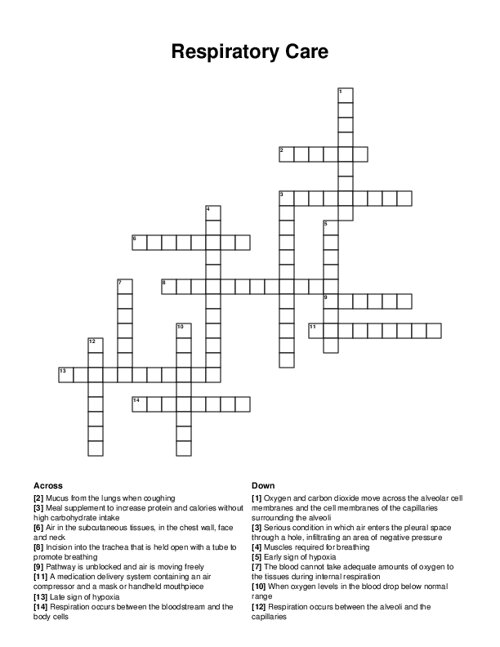
Respiratory Care
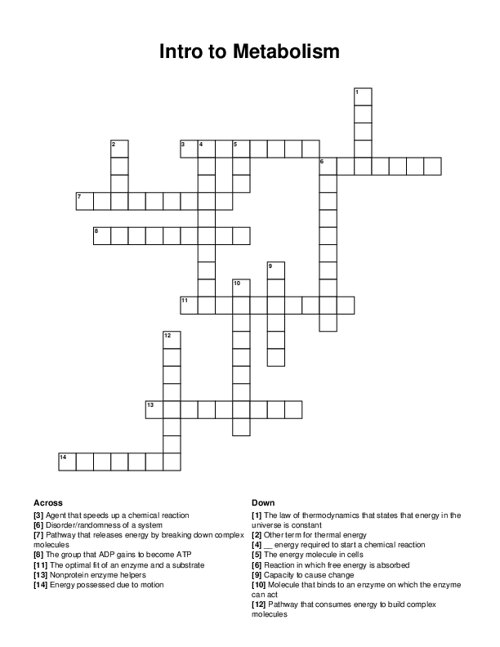
Intro to Metabolism
Nutrition Basics
Teen Health
Browse all Health / Fitness Puzzles
QUESTIONS LIST:
- reuptake : the process in which a neurotransmitter is taken back into the neuron after it has sent its signal.
- neuron : a nerve cell that sends and receives information.
- synapse : the small gap between two neurons where signals are passed on.
- receptor : a special structure on a cell where a neurotransmitter or drug can bind.
- dopamine : a neurotransmitter connected to reward, motivation and pleasure.
- reward : a positive feeling or result that makes the brain want to repeat an action.
- drug : a substance that can change how the body or brain works.
- brain : the organ that controls thoughts, feelings, movement and behaviour.
- addiction : a condition in which a person loses control over using a substance, even when it causes harm.
- craving : a strong desire to use a substance again.
- signal : a message that travels through or between nerve cells.
- chemical : a substance involved in reactions in the body or brain.
- tolerance : when the body gets used to a drug and needs more of it to get the same effect.
- neurotransmitter : a chemical messenger that carries signals from one neuron to another.
- serotonin : a neurotransmitter connected to mood, sleep and emotions.
- gaba : a neurotransmitter that slows down or reduces activity in the brain.
- glutamate : a neurotransmitter that increases activity in the brain and helps with learning and memory.
- endorphin : a natural chemical in the brain that can reduce pain and create feelings of pleasure.
- adrenaline : a chemical messenger connected to stress, excitement and the “fight or flight” response.
- acetylcholine : a neurotransmitter involved in movement, attention and memory.
- noradrenaline : a neurotransmitter involved in alertness, attention and stress responses.
