
Hypothermia Crossword Puzzle
Download and print this "Hypothermia" crossword puzzle, or solve it online directly in your browser. For the printable version, use a pencil or pen to fill in the answers. The completed answers are included, so you can easily check your work when you're finished.
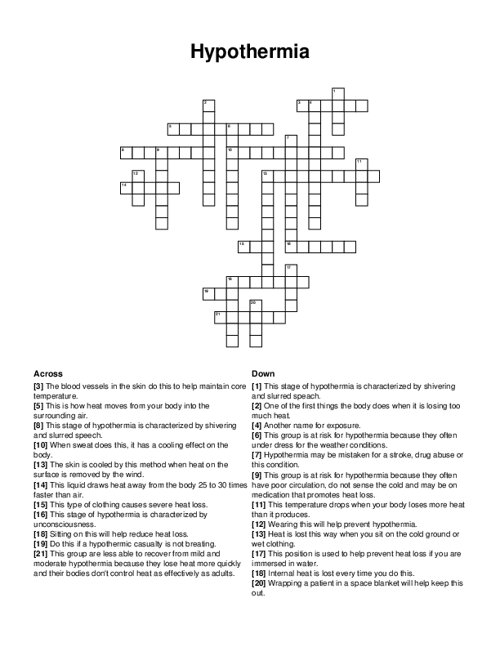
PDF will include puzzle sheet and the answer key.
Related puzzles:
More Health / Fitness Crossword Puzzles
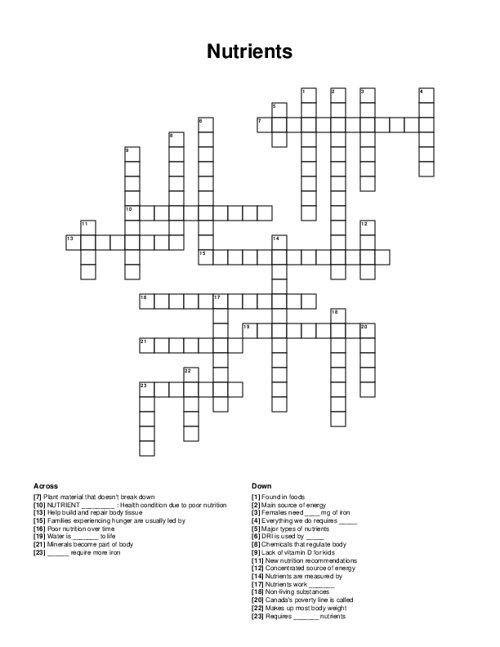
Nutrients
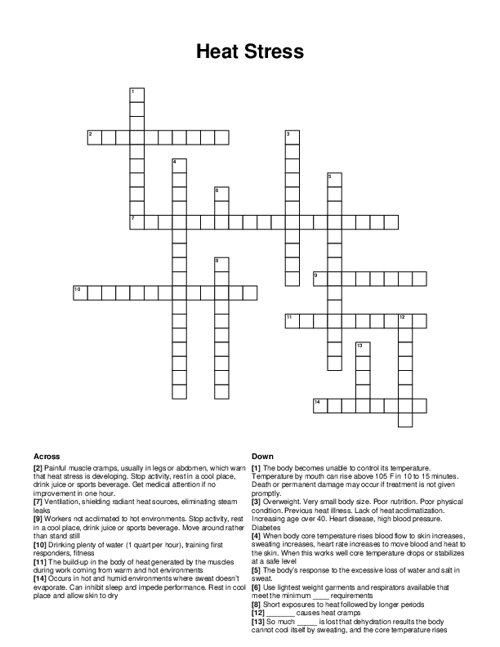
Heat Stress
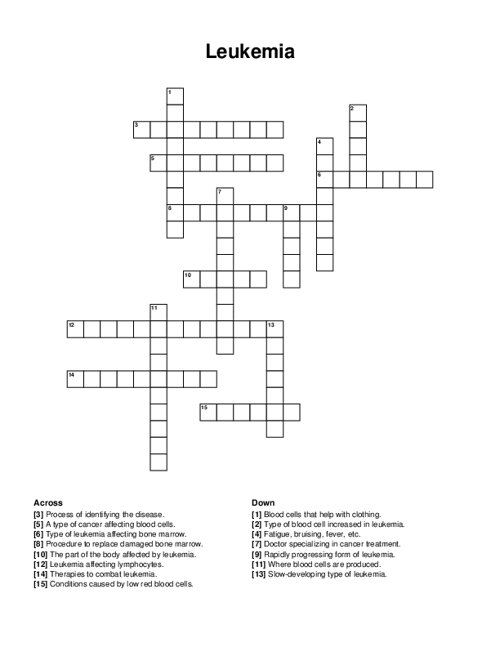
Leukemia
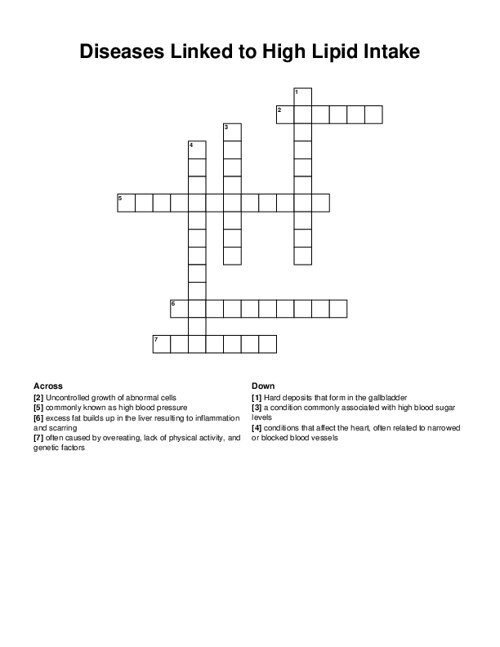
Diseases Linked to High Lipid Intake
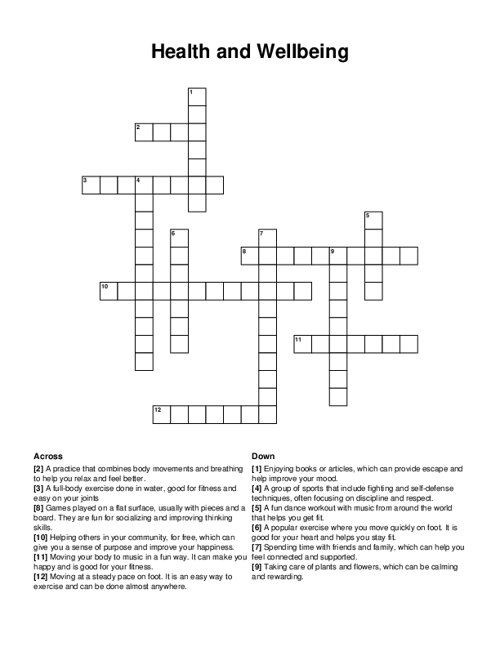
Health and Wellbeing
Browse all Health / Fitness Puzzles
QUESTIONS LIST:
- teenagers : this group is at risk for hypothermia because they often under dress for the weather conditions.
- water : this liquid draws heat away from the body 25 to 30 times faster than air.
- hypothermia : another name for exposure.
- radiation : this is how heat moves from your body into the surrounding air.
- evaporates : when sweat does this, it has a cooling effect on the body.
- elderly : this group is at risk for hypothermia because they often have poor circulation, do not sense the cold and may be on medication that promotes heat loss.
- hat : wearing this will help prevent hypothermia.
- shrink : the blood vessels in the skin do this to help maintain core temperature.
- wet : this type of clothing causes severe heat loss.
- cpr : do this if a hypothermic casualty is not breathing.
- help : this position is used to help prevent heat loss if you are immersed in water.
- moderate : this stage of hypothermia is characterized by shivering and slurred speech.
- drunkeness : hypothermia may be mistaken for a stroke, drug abuse or this condition.
- blanket : sitting on this will help reduce heat loss.
- core : this temperature drops when your body loses more heat than it produces.
- shivering : one of the first things the body does when it is losing too much heat.
- breath : internal heat is lost every time you do this.
- severe : this stage of hypothermia is characterized by unconsciousness.
- convection : the skin is cooled by this method when heat on the surface is removed by the wind.
- conduction : heat is lost this way when you sit on the cold ground or wet clothing.
- babies : this group are less able to recover from mild and moderate hypothermia because they lose heat more quickly and their bodies don't control heat as effectively as adults.
- mild : this stage of hypothermia is characterized by shivering and slurred speach.
- wind : wrapping a patient in a space blanket will help keep this out.
