
Categories of Law Crossword Puzzle
Download and print this "Categories of Law" crossword puzzle, or solve it online directly in your browser. For the printable version, use a pencil or pen to fill in the answers. The completed answers are included, so you can easily check your work when you're finished.
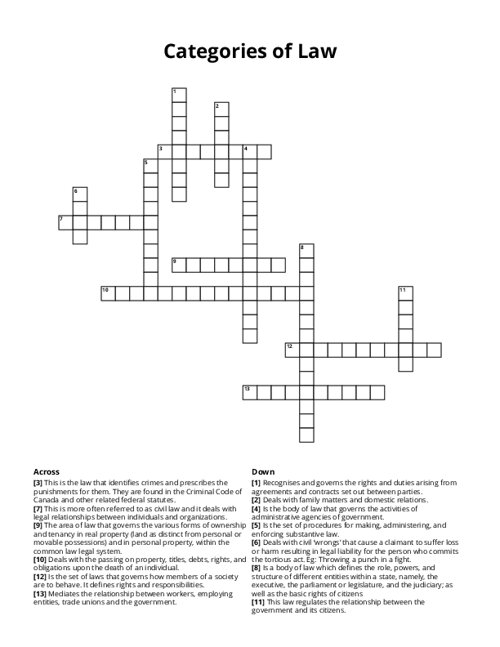
PDF will include puzzle sheet and the answer key.
Related puzzles:
More Law / Government Crossword Puzzles
O Canada
Legal Responsibilities
Propaganda Techniques
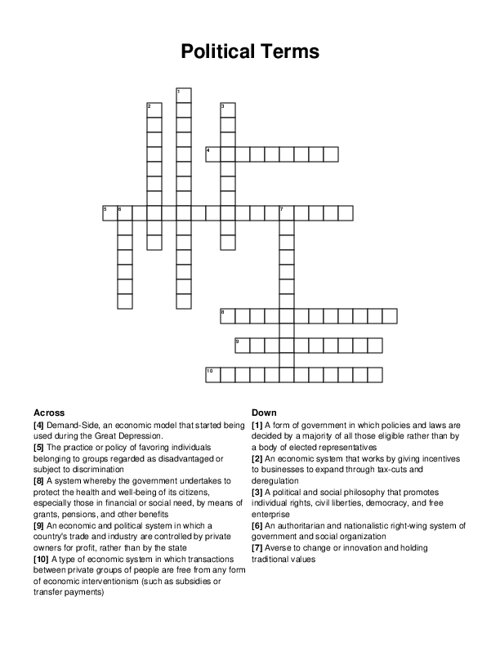
Political Terms
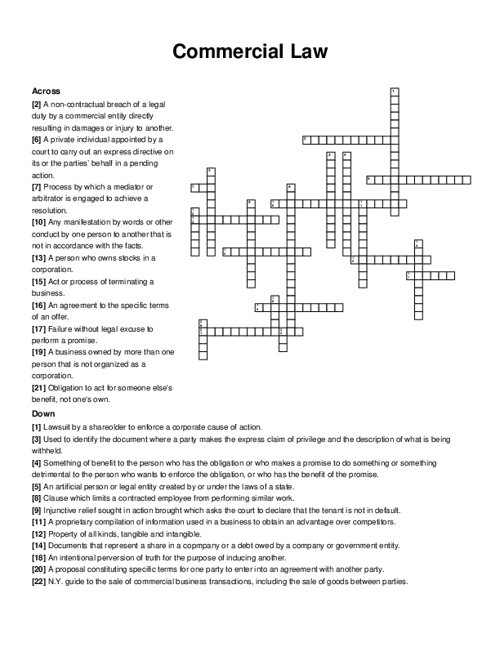
Commercial Law
Browse all Law / Government Puzzles
QUESTIONS LIST:
- substantive : is the set of laws that governs how members of a society are to behave. it defines rights and responsibilities.
- procedural :is the set of procedures for making, administering, and enforcing substantive law.
- public : this law regulates the relationship between the government and its citizens.
- criminal : this is the law that identifies crimes and prescribes the punishments for them. they are found in the criminal code of canada and other related federal statutes.
- private : this is more often referred to as civil law and it deals with legal relationships between individuals and organizations.
- administrative : is the body of law that governs the activities of administrative agencies of government.
- constitutional : is a body of law which defines the role, powers, and structure of different entities within a state, namely, the executive, the parliament or legislature, and the judiciary; as well as the basic rights of citizens
- tort : deals with civil ‘wrongs’ that cause a claimant to suffer loss or harm resulting in legal liability for the person who commits the tortious act. eg: throwing a punch in a fight.
- contract : recognises and governs the rights and duties arising from agreements and contracts set out between parties.
- family : deals with family matters and domestic relations.
- wills and estates: deals with the passing on property, titles, debts, rights, and obligations upon the death of an individual.
- property : the area of law that governs the various forms of ownership and tenancy in real property (land as distinct from personal or movable possessions) and in personal property, within the common law legal system.
- employment : mediates the relationship between workers, employing entities, trade unions and the government.
