
ANTIQUITY Crossword Puzzle
Download and print this "ANTIQUITY" crossword puzzle, or solve it online directly in your browser. For the printable version, use a pencil or pen to fill in the answers. The completed answers are included, so you can easily check your work when you're finished.
PDF will include puzzle sheet and the answer key.
Related puzzles:
More History Crossword Puzzles
Renaissance and Inquisition
The California Gold Rush
WWII and the Origins of the Cold War
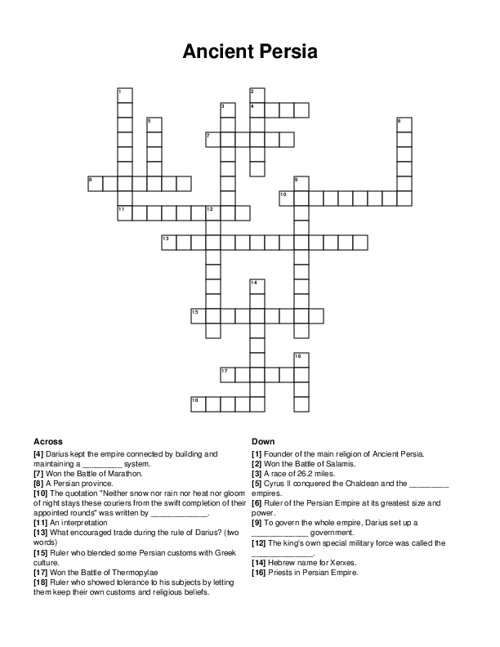
Ancient Persia
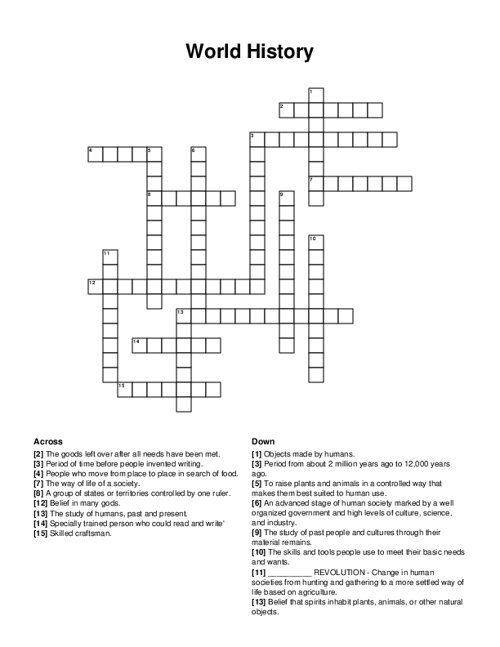
World History
QUESTIONS LIST:
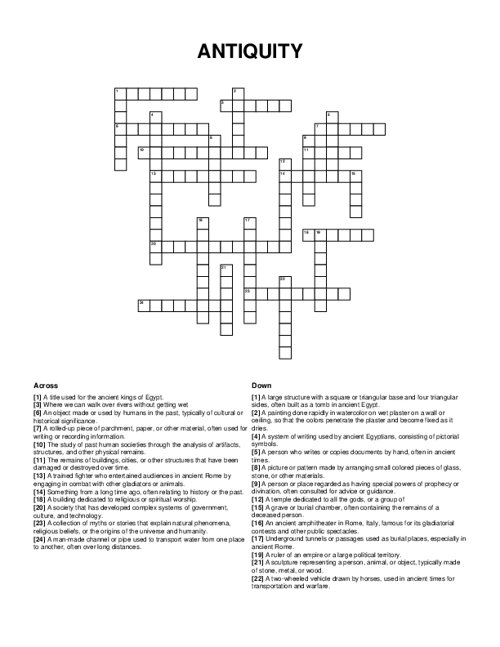
- ancient: something from a long time ago, often relating to history or the past.
- civilization: a society that has developed complex systems of government, culture, and technology.
- ruins: the remains of buildings, cities, or other structures that have been damaged or destroyed over time.
- temple: a building dedicated to religious or spiritual worship.
- statue: a sculpture representing a person, animal, or object, typically made of stone, metal, or wood.
- pyramid: a large structure with a square or triangular base and four triangular sides, often built as a tomb in ancient egypt.
- tomb: a grave or burial chamber, often containing the remains of a deceased person.
- emperor: a ruler of an empire or a large political territory.
- pharaoh: a title used for the ancient kings of egypt.
- archaeology: the study of past human societies through the analysis of artifacts, structures, and other physical remains.
- artifact: an object made or used by humans in the past, typically of cultural or historical significance.
- mosaic: a picture or pattern made by arranging small colored pieces of glass, stone, or other materials.
- scribe: a person who writes or copies documents by hand, often in ancient times.
- scroll: a rolled-up piece of parchment, paper, or other material, often used for writing or recording information.
- chariot: a two-wheeled vehicle drawn by horses, used in ancient times for transportation and warfare.
- gladiator: a trained fighter who entertained audiences in ancient rome by engaging in combat with other gladiators or animals.
- colosseum: an ancient amphitheater in rome, italy, famous for its gladiatorial contests and other public spectacles.
- aqueduct: a man-made channel or pipe used to transport water from one place to another, often over long distances.
- oracle: a person or place regarded as having special powers of prophecy or divination, often consulted for advice or guidance.
- hieroglyphics: a system of writing used by ancient egyptians, consisting of pictorial symbols.
- catacombs: underground tunnels or passages used as burial places, especially in ancient rome.
- fresco: a painting done rapidly in watercolor on wet plaster on a wall or ceiling, so that the colors penetrate the plaster and become fixed as it dries.
- mythology: a collection of myths or stories that explain natural phenomena, religious beliefs, or the origins of the universe and humanity.
- pantheon: a temple dedicated to all the gods, or a group of
- bridge : where we can walk over rivers without getting wet
